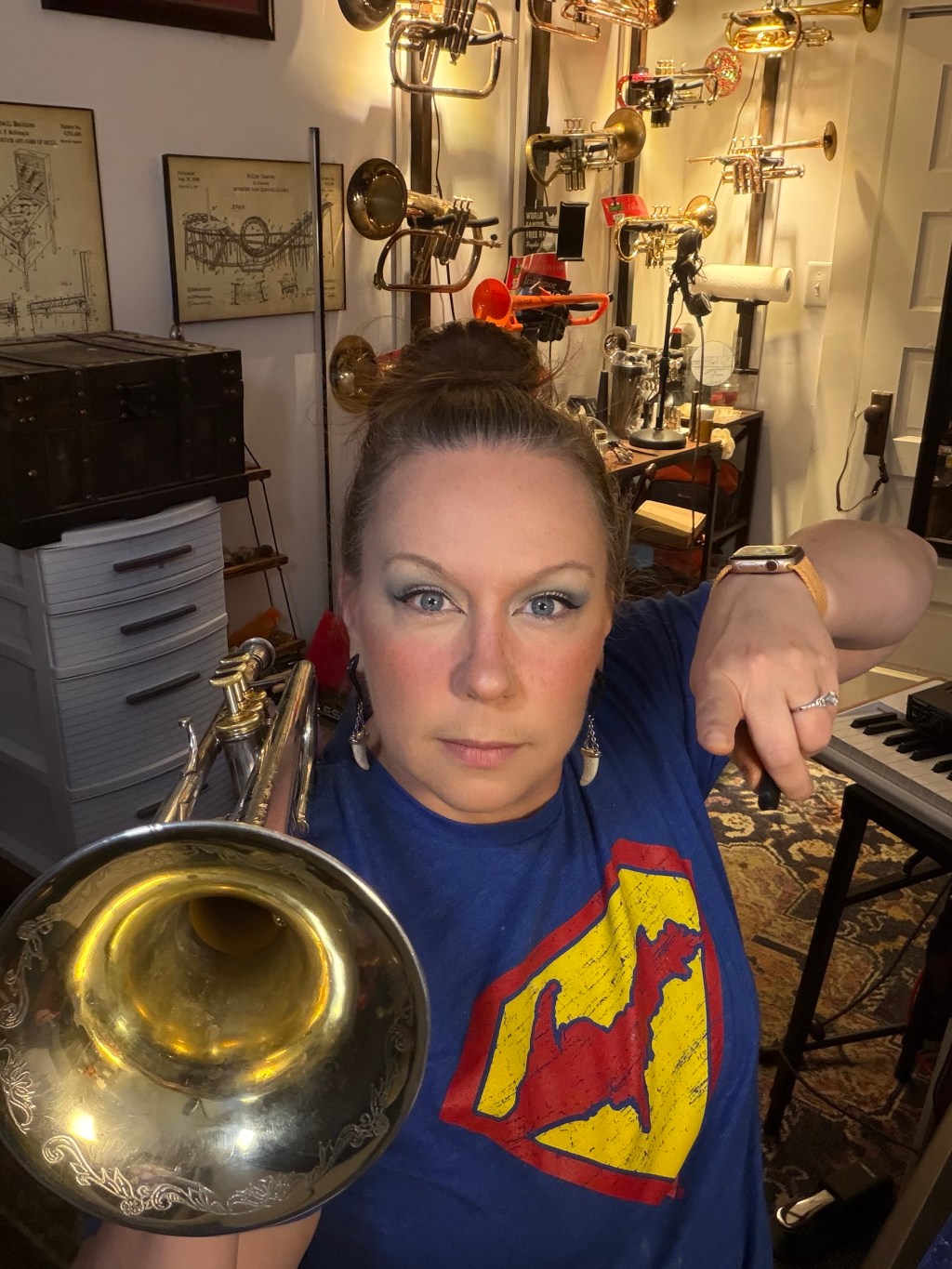
There has been a great deal of chatter among musicians about the plight that is AI and what it is doing to our industry. In my mind, there is no doubt that the use of AI to replace artists, clone voices, etc. is wildly unethical but even as this bit-based vermin infects our playlists, I don’t fear for my career as a musician. While digitally created music gets a little better every day, it still hasn’t come even the smallest increment closer to being able to do my job better than myself and the hordes of other trumpeters making music in the industry currently.
Just as AI has a tendency to overuse the em dash, phrase things in *just* enough of an off-putting way, and inflect its midi-based tones with a cadence that arouses suspicion, it also is incapable of wiggling the air in a convincing enough way to dupe unsuspecting listeners into believing that it is playing a brass instrument anywhere near close to well. Even the very best of digital brass sounds in my opinion, those created via the SWAM system by Native Instruments (a company I generally adore for its true-to-life sound making…) can’t touch the sound that a live brass section can create by making our little fart sounds into our various lengths of plumbing. This is not phrased to diminish what we do- every brass player I know including myself has spent countless thousands of hours honing our ability to audiate (hear sound within our “minds ear”) and then manifest that sound literally out of thin air, using highly refined equipment and physical techniques to produce the richest most lush tones possible for our instruments.
Of course, AI doesn’t have to do all of that. It just approximates complex waveforms that are congruent with what it has slurped up in its latest session of language learning. The thing is, these regurgitations are too uniform resulting in a sound that is so obviously digital that no person, trained or otherwise, would believe that they are real. Therefore, no producer worth their salt would get caught utilizing them unless they’re keen on being regarded as a hapless fool whose only goal is a miserably short cash grab rather than making actual art. Are they using AI tools that make their lives easier in a studio setting? I hope so. The editing capabilities that have been opened up by the inclusion of computer based learning have sped up the production process exponentially. However, I feel that that is the most effective use of these tools over all- they’re meant to make our lives more administratively efficient not creatively efficient.
In other words, no- I’m not afraid of the computer-tooters that people are fear mongering over and thinking they’re going to take over my role in the industry. Instead, I view the use of comically bad AI brass sounds as job security. The day someone on the level of Quincy Jones or Jerry Hey uses computerized brass sounds to optimize their output and effectively lay off the thousands of studio musicians across the country who pour our souls into every note we play will be a cold day in hell, I think. I don’t want to work for a producer who thinks so little of my vocation that they use a computer to do my job, and I doubt seriously that any of my compatriots would either. It’s likely they’re producing music that is musically sub-par in the first place. The producers that pay studio musicians to set the airwaves alight with the reverberations of the sounds of our very souls are the ones who will continue to make waves in the industry, keep their musicians employed and well-compensated and enjoy many years of musical contribution which will live on in perpetuity. Brass players and more specifically trumpeters have nothing to fear, and everything to gain from the employment of these cheap (actually wildly expensive to the pocketbook and environment if we are being honest…) parlor tricks, and I think the music industry will prove me right in coming years.


Leave a Reply